EN
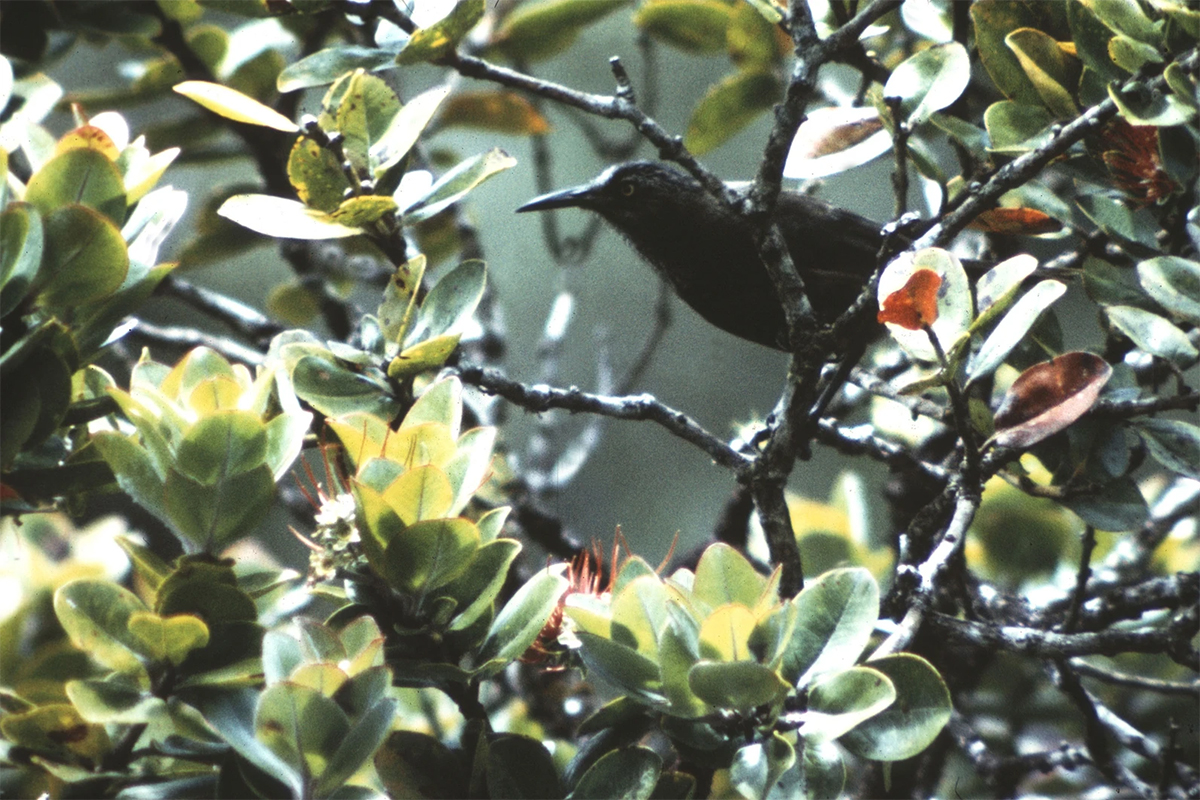
The Kauaʻi ʻōʻō was the final representative of the ʻōʻō genus, belonging to the now-extinct Mohoidae family of birds native to the Hawaiian Islands. Its extinction marked the end of an entire avian lineage.
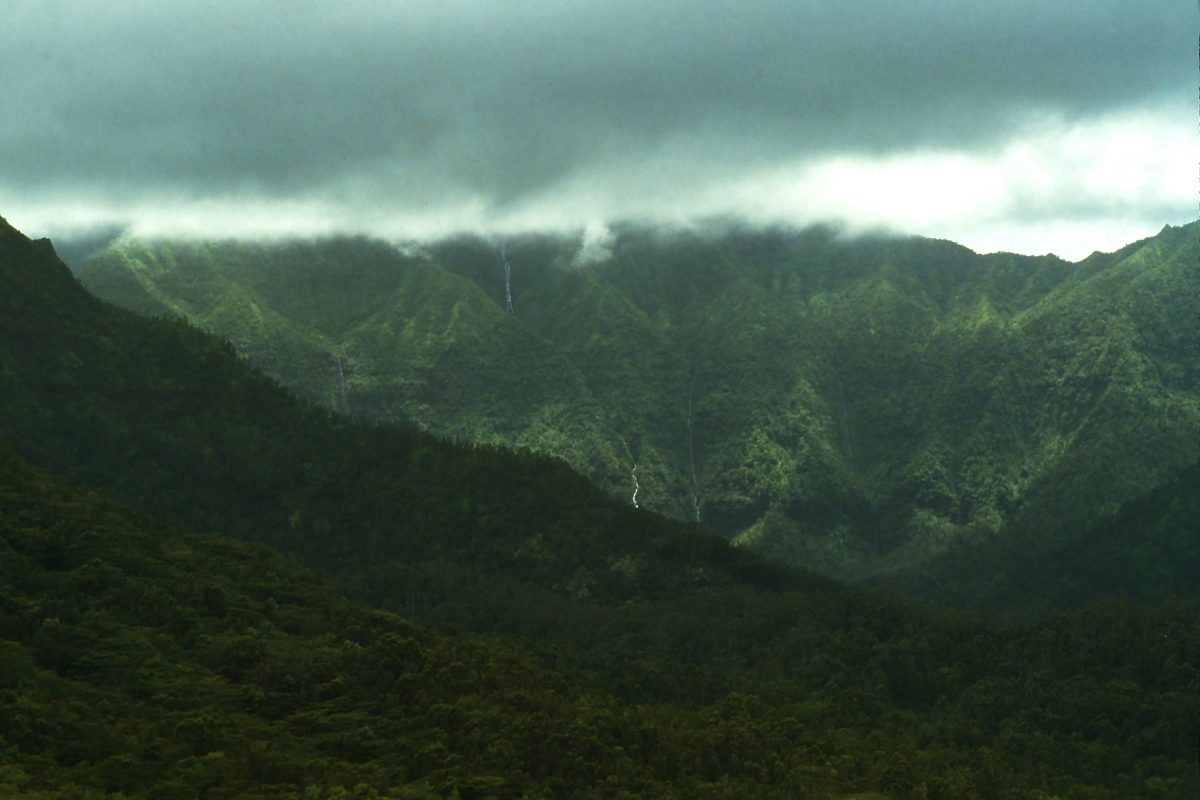
The species faced a gradual decline due to a combination of ecological pressures: habitat loss, invasive species, and disease. But the final blows came from two powerful hurricanes: Iwa in 1982 and Iniki in 1992. These storms devastated the island’s old-growth forests, destroying the cavity-bearing trees essential for nesting and halting regrowth before the species could recover. The last known female likely perished during Hurricane Iwa. The male was last seen in 1985, and his song was recorded for the final time in 1987 by naturalist David Boynton. Despite search efforts in 1989, no further sightings were made. After Hurricane Iniki struck in 1992, hope faded. In 2000, the IUCN officially declared the Kauaʻi ʻōʻō extinct. What remains is a memory, a photograph, a recording. A call unanswered.
The work reflects on the concepts of separation and disappearance: between male and female, species and habitat, life and death, past and present. A separation that is expressed in form and content. The web page is divided into two parts that never come into contact. One reproduces the song of the last male specimen, the other the silence of the female that has already disappeared.
IT
Il Kauaʻi ʻōʻō fu l’ultimo rappresentante del genere ʻōʻō, appartenente alla famiglia Mohoidae, un gruppo di uccelli originari delle isole Hawaiʻi oggi completamente estinto. La sua scomparsa ha segnato la fine di un’intera linea evolutiva.
La specie ha subito un declino graduale, causato da una combinazione di pressioni ecologiche: perdita dell’habitat, specie invasive e malattie. Ma i colpi decisivi arrivarono con due uragani: Iwa nel 1982 e Iniki nel 1992. Queste tempeste distrussero le foreste antiche dell’isola, abbattendo gli alberi con cavità fondamentali per la nidificazione e impedendo la ricrescita prima che la specie potesse riprendersi. L’ultima femmina conosciuta scomparve probabilmente durante l’uragano Iwa. Il maschio fu avvistato per l’ultima volta nel 1985, e il suo canto venne registrato un’ultima volta nel 1987 dal naturalista David Boynton. Nonostante gli sforzi di ricerca nel 1989, non furono trovati altri esemplari. Dopo il passaggio dell’uragano Iniki nel 1992, le speranze svanirono. Nel 2000, l’IUCN dichiarò ufficialmente l’estinzione del Kauaʻi ʻōʻō. Ciò che resta è un ricordo, una fotografia, una registrazione. Un richiamo rimasto senza risposta.
L’opera riflette sui concetti di separazione e scomparsa: tra maschio e femmina, specie e habitat, vita e morte, passato e presente. Una separazione che si esprime nella forma e nei contenuti. La pagina web è divisa in due parti che non entrano mai in contatto. In una viene riprodotto il canto dell’ultimo esemplare maschio, nell’altra il silenzio della femmina già scomparsa.